
The Metrics That Killed Brand Advertising


The Metrics That Killed Brand Advertising (And the Ones That Will Bring It Back)
TL;DR: For 60+ years, advertising built brands through storytelling, emotional resonance, and patient repetition. Then the internet handed us dashboards, and we traded craft for click-through rates. Here's how brand marketers reclaim what was lost.
When Advertising Was Proud of Itself
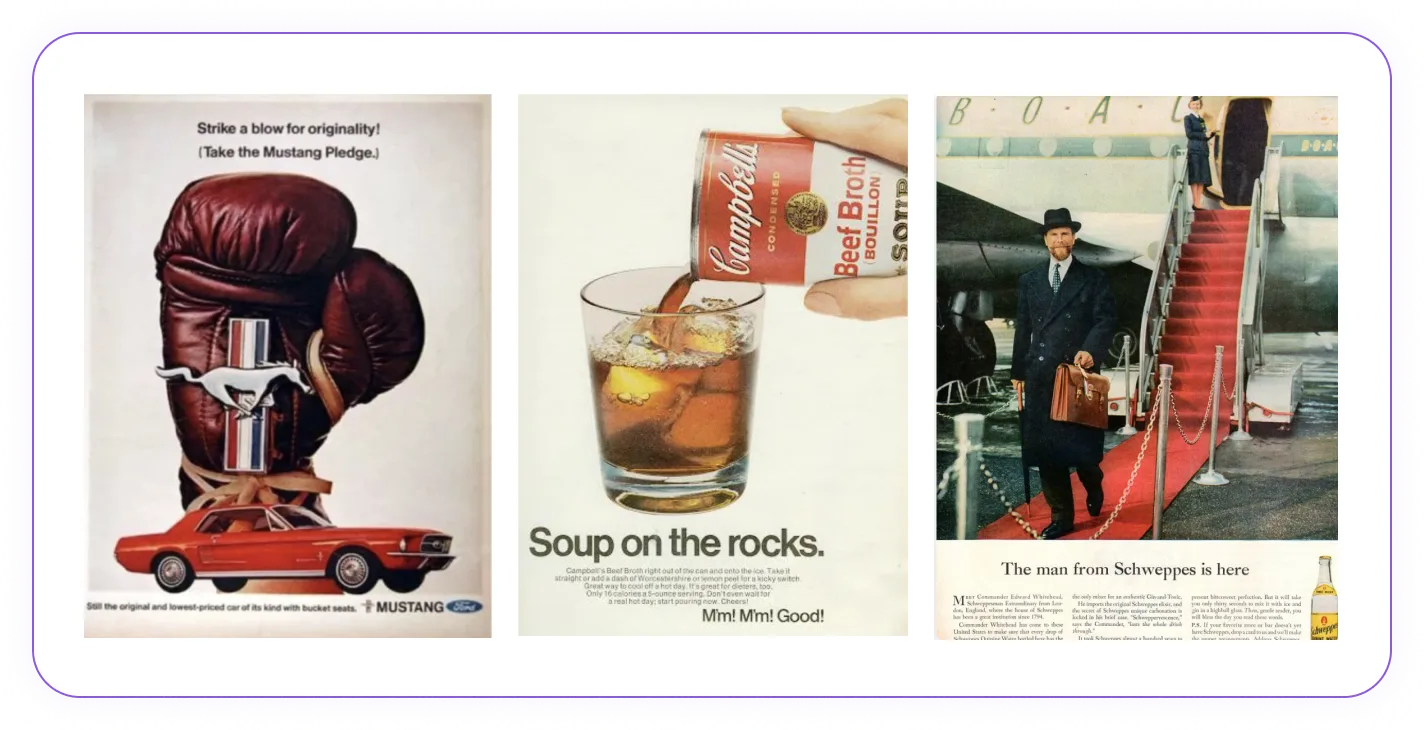
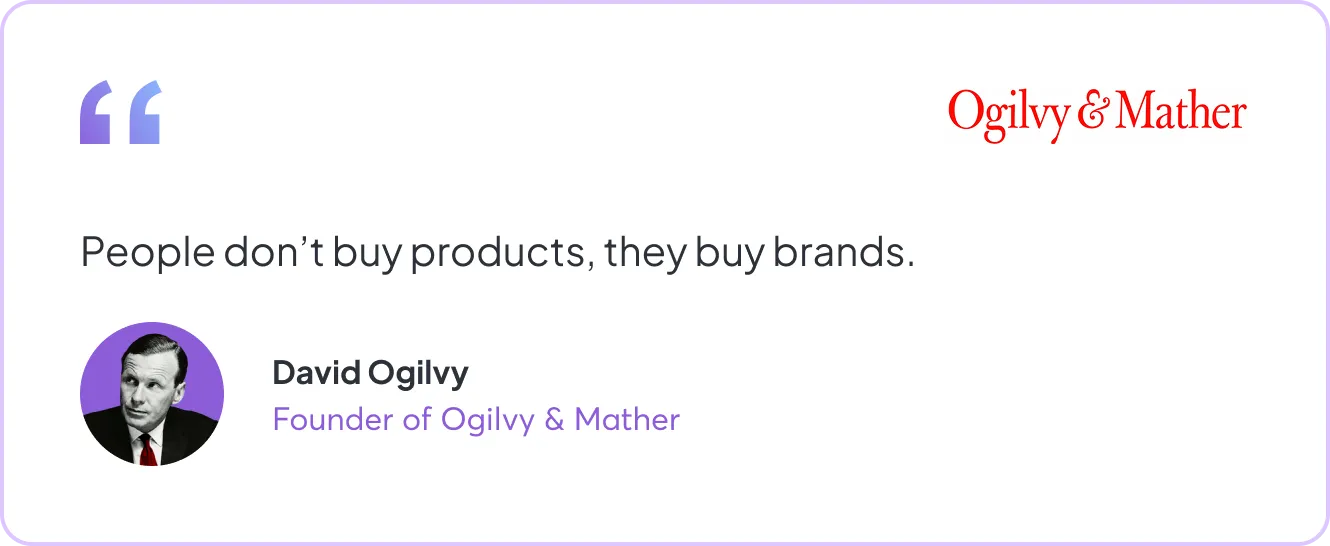
In the 1950s and 60s, David Ogilvy didn't optimize for clicks. He optimized for memory.
He believed advertising could change how people felt about products, not just whether they bought them today, but whether they'd reach for them automatically over years and decades. Campaigns weren’t built around measurable immediate response. They were investments in mental real estate.
The giants of that era, Ogilvy, Leo Burnett, Bill Bernbach, understood something that the digital dashboard obscured: brand building is a long game. You're not trying to win the moment. You're trying to win the shelf.
Print advertising in that era had metrics too. Readership figures. Recall studies. Starch scores measured whether readers remembered ads. It was imprecise, expensive to measure, and deeply qualitative, and the industry produced some of the most effective advertising in history because it had no choice but to think about the quality of attention.
Then the internet arrived.
How We Got Here
The story of digital advertising's measurement obsession is a story of what happens when precision tools meet the wrong problem.
The first banner ad ran in 1994. It was a novelty. It achieved a 44% click-through rate. That number set a benchmark, and inadvertently created a benchmark ideology that has haunted brand advertisers ever since.

Direct response marketers loved digital. They should have. E-commerce businesses, subscription services, financial products, these categories had genuine online conversion paths. A click meant something. It was the first step in a measurable chain that ended in a purchase. Attribution was tractable. Optimization was possible. ROI could be justified in a spreadsheet.
The problem started when brand advertisers across retail, automotive, finance, FMCG, and B2B adopted the same framework.
Nobody in your organization wakes up, sees a display ad for instant noodles, and immediately places an online grocery order.
Nobody sees a car ad and books a test drive that afternoon. That's not how brand categories work. Yet somewhere in the mid-2000s, brand budgets started chasing CTR.
Agency decks started leading with click metrics. Procurement teams started evaluating campaigns on cost-per-click.
It was cargo-cult marketing: copying the motions of measurement without measuring anything that mattered.
The result: Two decades of underinvestment in the brand-building that these businesses actually run on, in favour of optimization signals that are statistically indistinguishable from noise.
The average display CTR across brand categories sits at 0.06 to 0.08%. Industry standard. Nobody puts this number in a deck as evidence of success. Yet it still drives campaign decisions.

The Cost of Getting This Wrong
The shift to short-term brand metrics didn't just waste budgets. It damaged brands.
When you optimize for CTR or similar on a branding campaign, you optimize for the wrong audience: the tiny minority who click on display ads, often by accident. You shift budget toward platforms that generate clicks rather than platforms that generate memory.
You deprioritize reach and frequency, the twin engines of brand awareness, in favour of engagement metrics that tell you very little about whether a consumer will choose your product on Thursday when they're standing in front of a supermarket shelf or a car showroom.
The brands that have recognized this first are winning.
The principle isn't new. The urgency is.
The 2026 Brand Advertising Metrics Prioritization Matrix
Here's how to think about measurement when your goal is brand building, not bottom-funnel conversion.
This applies whether you're in FMCG, retail, automotive, financial services, B2B, or any category where the path from ad exposure to purchase spans days, weeks, or months and your goal is long-term growth.
Tier 1: What You Should Obsess Over
These are your north-star metrics. If these aren't moving, nothing else matters.
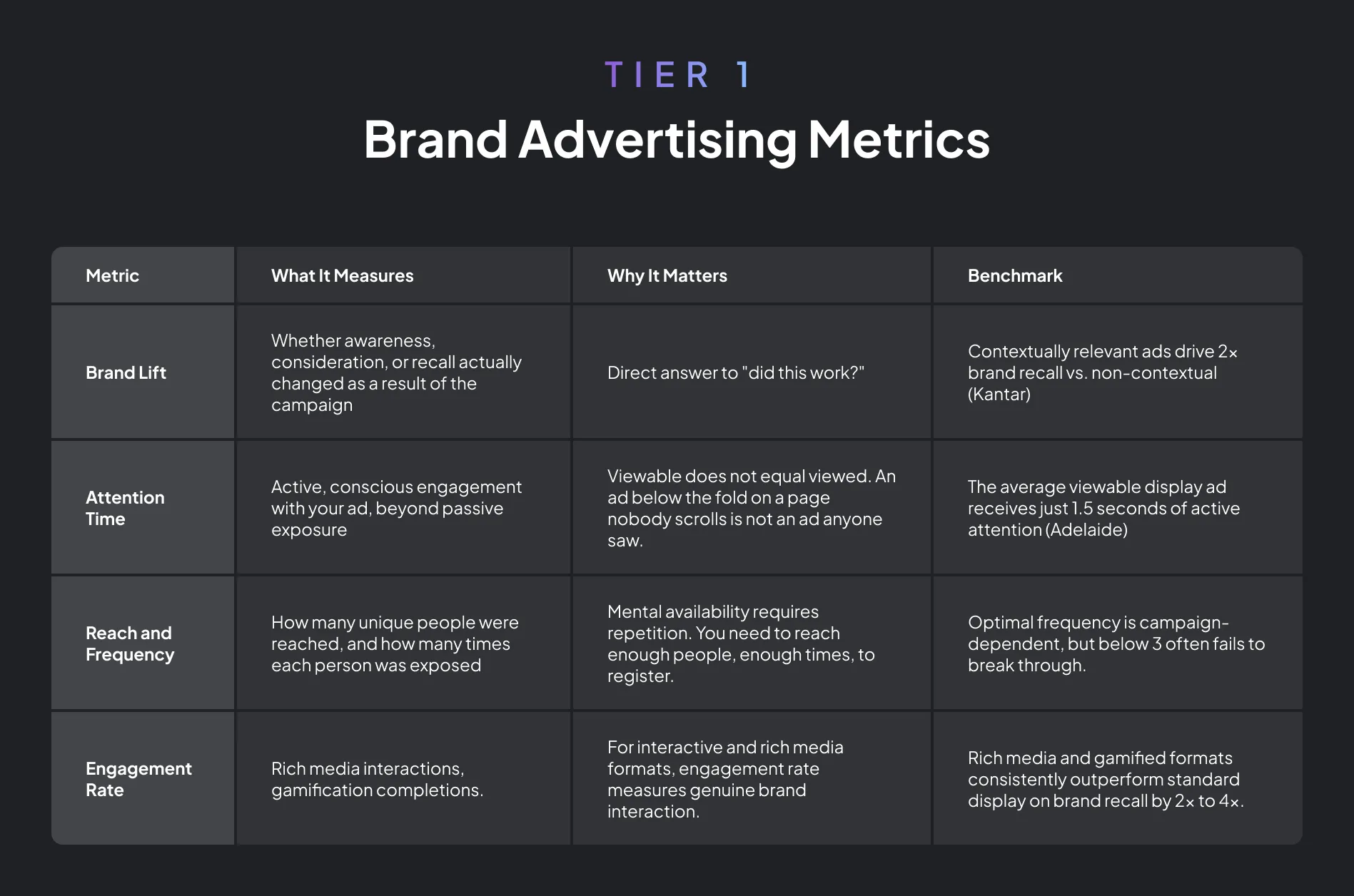
Brand lift is your ultimate truth. If awareness didn't move, the campaign didn't work, regardless of what the impressions dashboard says.
Attention time is your leading indicator. The 1.5-second Adelaide benchmark puts the whole viewability conversation in context: an ad that's technically "viewable" but below-the-fold on a page nobody scrolls hasn't reached anyone. An ad that earns 8 seconds of active eye contact is worth ten that register as peripheral blur.
Engagement rate belongs here for brand advertisers running interactive, rich media, or gamified creative. An automotive brand whose configurator ad draws 45 seconds of interaction is getting genuine brand engagement. An FMCG brand whose Ramadan scratch-card unit is actively played is building memory. This is categorically different from a click or a social like.
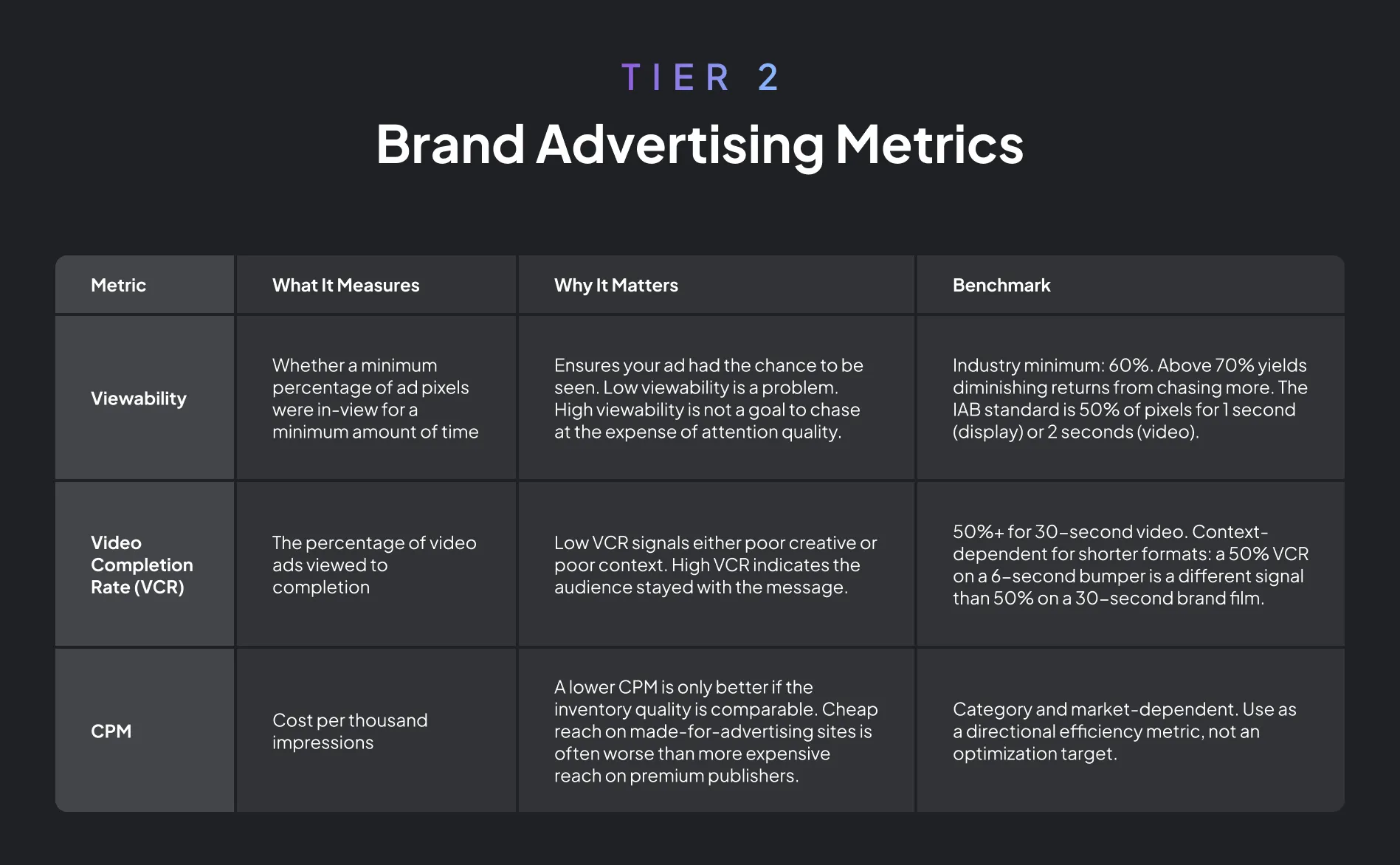
Tier 2: Monitor, Don't Optimize
Table stakes. Worth checking. Don't let them drive decisions.
Tier 3: Stop Looking At These
If these are your primary KPIs on a branding campaign, you're measuring the wrong game.

What This Means for Your Media Buy
If brand building requires brand lift, and brand lift requires attention, your strategy follows.
1. Shift Budget to Attention-Optimized Inventory
Not all inventory is equal at the same viewability score. Premium publishers with engaged audiences drive more attention per impression than MFA sites gaming the viewability benchmark. In-game environments, premium editorial, and contextually relevant placements consistently generate longer attention times than social feed formats.
2. Use Contextual to Drive Relevance and Attention
Contextual targeting isn't just brand safety. It's attention optimization. An ad for coffee adjacent to coffee-related content gets more active processing than the same ad in a random programmatic slot. When the page context matches the message, audiences are already in the right cognitive frame.
AI-powered contextual tools identify not just safe environments but relevant ones: semantic understanding of page content that goes beyond keyword matching to find the moments when your audience is most receptive.
3. Measure Before the Campaign, Not After
Set up brand lift studies. Set attention benchmarks. Define what "good" looks like before you brief the agency.
If your agency responds to "what's our expected brand lift?" with a blank stare, you have a partner problem.
4. Brief Your Agency Differently
Stop providing CTR targets for branding campaigns. Start asking:
• What's our expected brand lift?
• How are we measuring attention quality?
• What makes this context relevant to our audience?
• How does this placement compare on attention metrics?
The Bottom Line
The Ogilvy era wasn't measurement-free. It was measurement-appropriate. Recall studies. Awareness tracking. The patient accumulation of brand equity measured in years, not clicks.
Digital gave us precision and we mistook it for wisdom. CTR is precise. It's also largely meaningless for brand advertising: a metric designed for someone buying shoes, applied to someone building a brand.
The industry knows this. The brands that act on it in 2026, shifting budgets toward attention, measuring lift, choosing context over convenience, will be the ones with the mental availability that converts at the shelf, in the showroom, and at the renewal date.
The dashboard might look less exciting. The business will work better.


Level Up Your Advertising with Eskimi
- Reach 96% of Open Web
- 2,500+ Targeting Options
- 100% Managed or Self-Service
- In-House Creative Studio Team
- Display, Video, In-Game & CTV
- #1 Rated DSP on G2
Launch your next display ad campaign with us