

In the highly competitive over-the-counter (OTC) healthcare category, visibility alone isn't enough to break habitual purchase behaviors. To move the needle, a brand must cut through the noise and demand relevance, trust, and memorable communication.
For Pharos, the challenge was to ensure that when a child has a fever, mothers don't just reach for what they know, they reach for Proris. By partnering with DM Pratama and leveraging Eskimi's precise targeting, the brand successfully positioned itself as the top-of-mind solution in Indonesia.
Driving brand and business results together
Pharos is one of the leading pharmaceutical companies in Indonesia, producing over 400 products across prescription and OTC categories. With more than 50 years of history, the company is known for its commitment to quality and innovation in healthcare.
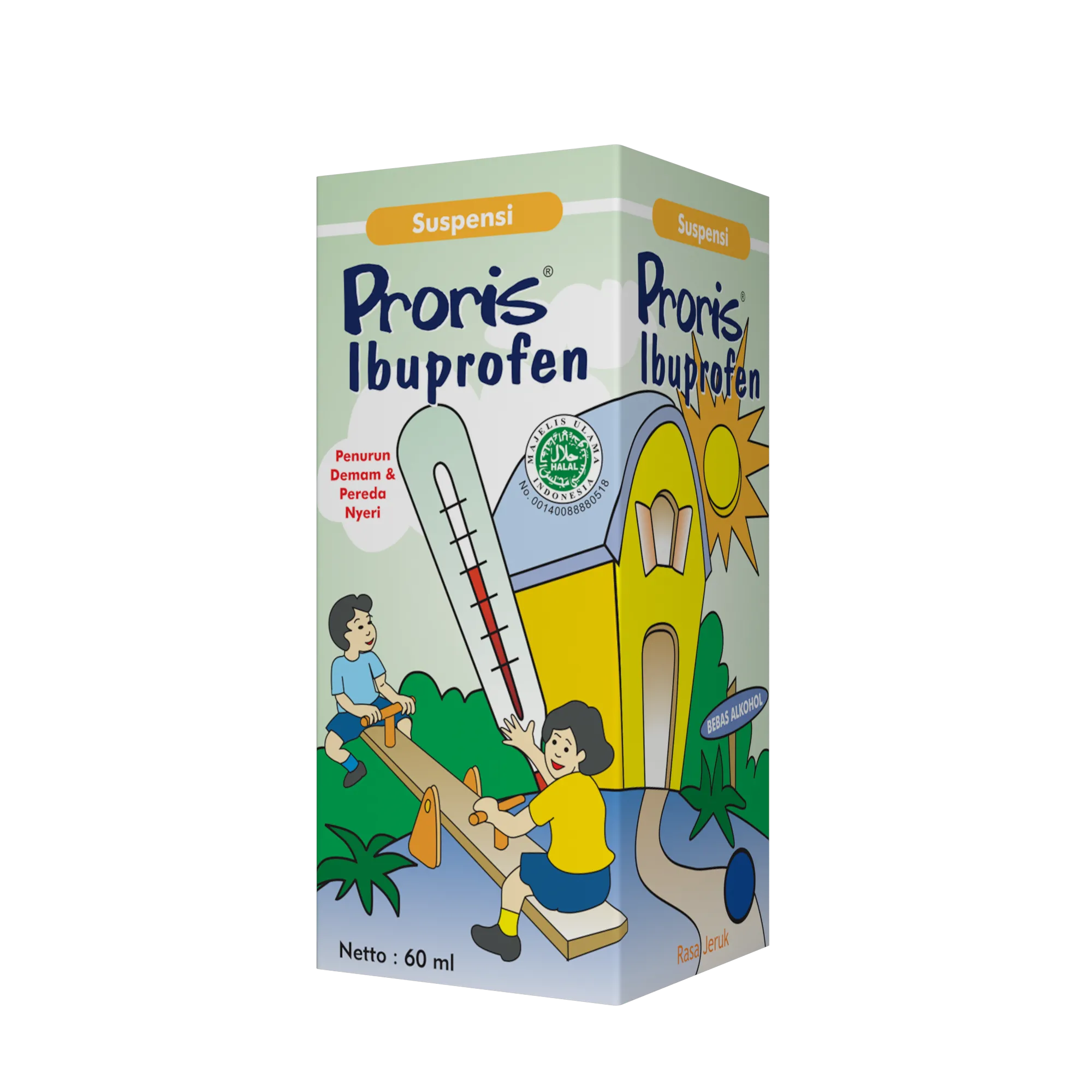
Proris Suspension is one of its key OTC products, designed to reduce fever in children and relieve mild to moderate pain. The brand plays an important role in everyday family healthcare.
To strengthen its market position, Pharos partnered with DM Pratama, a leading integrated digital agency in Indonesia. The agency provides end-to-end solutions across the consumer journey from strategic planning and communication development to execution and performance-driven activation. And focuses on creating seamless, integrated experiences that enhance brand presence while driving measurable business outcomes.
Pharos has been a key client partner for the past few years, with DM Pratama supporting multiple brands through strategic digital planning, execution, and ongoing optimization to improve both awareness and conversion metrics, shared Abhishek Rajoria, VP Integrated Media at DM Pratama.
Overcoming the "habitual" barrier
Millennial mothers (aged 25–34) are the primary decision-makers for family healthcare. However, they are often influenced by deeply ingrained habits and a saturated market.
With multiple competitors offering similar benefits, and consumers often sticking to familiar brands, the goal was not only to increase awareness but also to shift perception and drive trial.
The core challenge for the brand is to rebuild and sustain high levels of awareness while simultaneously strengthening consideration. Beyond awareness, the brand must also effectively convert consideration into trial, ensuring more parents choose Proris as their preferred solution, shared Sumia, Brand Manager at Pharos.
To address this, the campaign focused on mothers who are highly involved in family healthcare decisions.
Targeting modern moms
To drive relevance, the campaign focused on millennial mothers across upper- and middle-socioeconomic groups, using a dual-audience approach that combined interest and keywords-based targeting.
The first approach leveraged interest-based signals to reach health-conscious moms, identified through affinities such as women's health, family & relationships, and shopping. This was complemented by contextual alignment with lifestyle-driven content across categories like home & garden, food & drink, and health, ensuring the brand appeared in environments that naturally resonate with everyday routines.
The second approach deepened relevance through contextual targeting, using keywords related to parenting and childcare, such as children's health, seasonal and preventive care, and healthcare services, while excluding less relevant content.
A balanced mix of keyword and interest-based targeting allowed the campaign to deliver both depth and scale, with each approach playing a distinct role. Together, these two approaches enabled the brand to connect with modern moms in the right moments, delivering messaging tailored to their needs, mindset, and daily realities.
By combining contextual timing, precise audience targeting, and compelling video content, the campaign aimed not only to rebuild top-of-mind awareness but also to drive meaningful action among its core audience, said Sumia.
A full-funnel strategy with immersive formats
To maximize impact, the strategy utilized a mix of video and rich media formats:
Outstream & Instream video
Video was essential for demonstrating product use and reinforcing trust that is crucial in the sensitive pediatric healthcare category.
Interactive Rich Media
Interactive units encouraged users to actively engage with the ad, increasing dwell time and message retention, both of which are critical for consideration.
All formats incorporated clear, action-oriented CTAs, seamlessly directing users to e-commerce platforms. This ensured that the campaign not only built awareness and recall but also effectively translated interest into measurable trial, added Abhishek Rajoria.
Measurable impact beyond media metrics
The campaign delivered over 3.3 million impressions and reached more than 2.1 million users, maintaining strong efficiency.
An overall CTR of 0.45% reflects solid user interest, with rich media formats performing even stronger at 0.49% CTR and a 5.9% engagement rate, demonstrating the value of interactive formats.
High viewability rates, averaging 71%, indicate that the campaign consistently delivered ads in quality, high-visibility placements. Video performed equally well, achieving 72% viewability and driving deep engagement, with an impressive 88.23% view-through rate (VTR) and a 60.60% completion rate (VCR), indicating that users not only noticed the ads but also stayed engaged through to the end.
The campaign delivered on all KPIs, exceeding expectations in key areas and outperforming internal benchmarks. It not only drove immediate impact but also established a proven, repeatable model for sustained brand growth, noted Sumia.
Keyword-based targeting stood out for driving stronger engagement (10.51%), achieving impressive results with rich media and high video performance, with VTR 90% and VCR 63%. It proved highly effective in capturing attention within relevant content environments.
In contrast, interest-based targeting excelled in scale and efficiency. With stronger viewability (73%), it ensured broader audience coverage. It also delivered a higher CTR (0.48%), indicating strong initial interest.
While the campaign delivered a strong media performance, the real impact was captured through the Brand Lift Study.
The Brand Lift study was instrumental in measuring the campaign's effectiveness across the full consumer funnel, providing robust validation beyond standard media metrics, said Abhishek Rajoria.
The results confirmed that the campaign didn't just reach audiences, it influenced them.
- +12.1pp ad recall uplift
- +9.0pp increase in brand favorability
- +4.1pp uplift in brand association
- +3.4pp increase in purchase intent
Notably, Proris moved from third place to the leading brand associated with fever and pain relief among exposed users, overtaking key competitors. The results confirm that the campaign successfully cut through the clutter, reaching the right audience with high-impact messaging and driving strong awareness at scale.
Beyond awareness, the campaign delivered a clear shift in brand perception, strengthening consideration among millennial moms. It also demonstrated the ability to turn interest into action, effectively moving consumers closer to trial.
Together, these results underscore a campaign that didn’t just deliver on one metric, but achieved measurable impact across the entire funnel, setting a benchmark for precision, effectiveness, and full-funnel performance, shared Sumia.
The Proris campaign proved that with the right combination of creative, targeting, and measurement, brands can successfully influence consumers at every stage of the funnel.
From building awareness to shifting perception and driving purchase intent, Pharos turned a challenging category into an opportunity for growth.